.png)



.jpg)
AI CRM software is out of buzzwords and demonstrations. It is also being used today by startups, scale-ups, growing businesses to achieve efficiency, customer journeys, and make smarter sales decisions.
But let’s be clear.
AI based CRM is no silver bullet.
It does not improve failed sales processes instantly.
And certainly, it is not a substitute for human judgment and strategy as well as relationship-building.
In the case with Onekode, AI-powered CRM is referred to as a support system, not a shortcut. When applied properly, it will enable teams to work smarter, in a faster manner and be more focused on what really fuels growth.
This blog disaggregates the actual applications of AI-powered CRM software, decouples realistic value and marketing hype, and demonstrates to businesses how it is being used in the present day, neither promising nor selling too much.

What AI-Powered CRM Actually Means (No Hype)
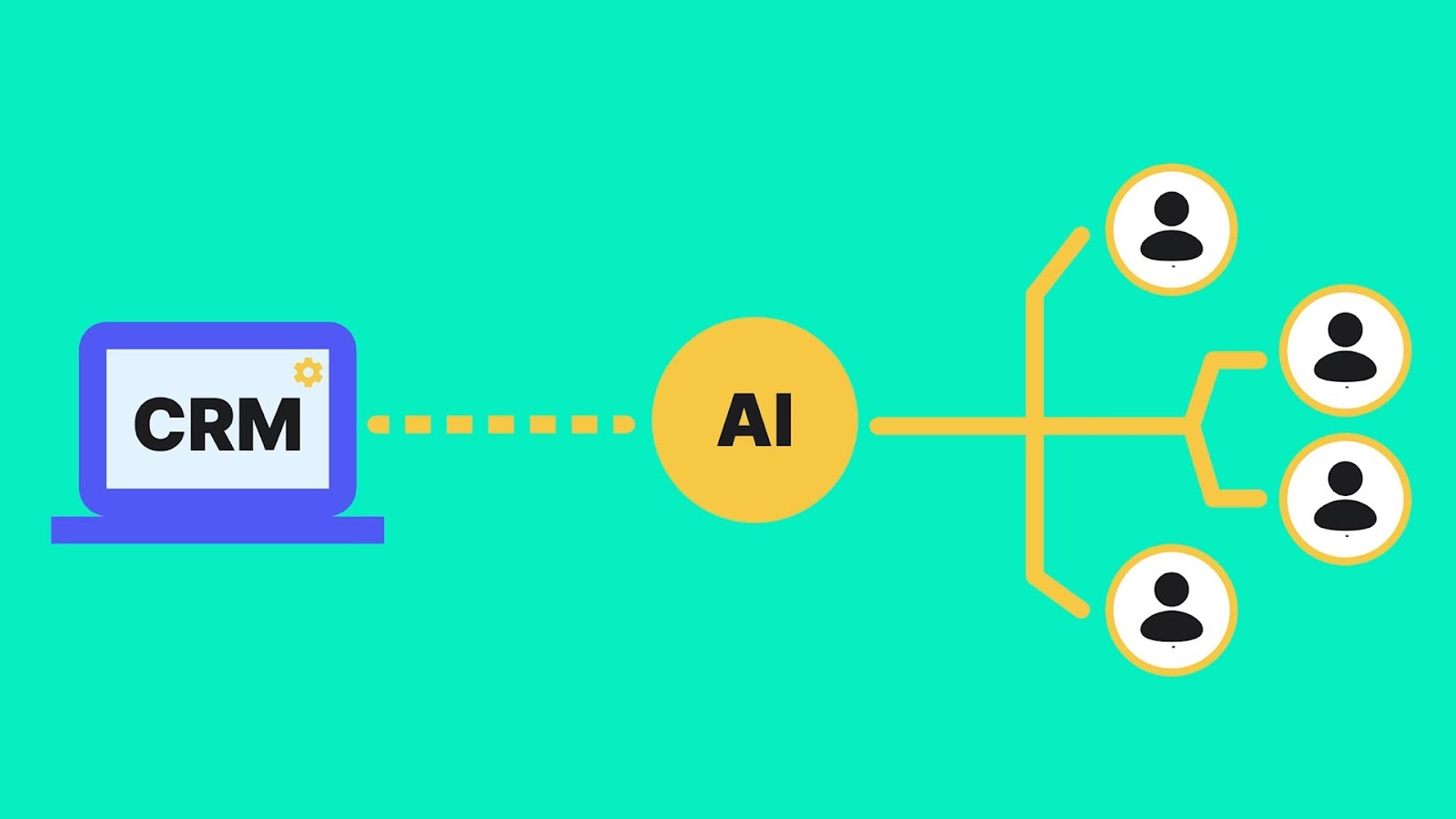
Fundamentally, AI-driven CRM software applies machine learning and analyses to:
- Handles large combines of customer data.
- Find trends that humans can not wish to identify by hand.
- Automation of time-consuming and repetitive processes.
- Surface knowledge useful in decision-making.
What it does not do is to think strategically on your behalf.
Results are best obtained through a moderate approach:
- AI deals with data, automation, and signals.
- Human beings manage strategy, situation and relationships.
Under the wing of those two, CRM will be an engine of growth and not just a database.
Real Use Cases of AI-Powered CRM Software
1. Predictive Lead Scoring That Actually Saves Time
Predictive lead scoring is considered one of the most useful and valuable applications of AI-powered CRM.
The Problem
Sales teams commonly use time on punching the dead ends that would never turn to the sales- while those with high intent potential do not get the follow-ups.
Single-stage lead scoring is based on fixed guidelines:
- Job title
- Company size
- Industry
- Form submissions
These rules don’t adapt as buyer behavior changes.
How AI-Powered CRM Helps
AI analyzes historical CRM data, including:
- Past closed deals
- Lost opportunities
- Email engagement
- Website behavior
- Response timing
It then assigns a probability score to each lead based on how likely they are to convert.
Real-World Impact
Sales teams stop guessing.
The attention of reps is paid to leads with the actual intention to purchase.
Response times improve.
The number of people converted is better- whether through good work is applied where it counts the most that counts.It is not automation that makes salespeople redundant. It is prioritization in a proper way.
2. Hyper-Personalization at Scale (Without Burning Out Teams)
Personalization works, but scaling it manually doesn’t.
The Problem
Most businesses want to personalize communication but end up sending generic messages because:
- Customer lists are too large
- Data is scattered
- Manual personalization doesn’t scale
Customers notice. Engagement drops.
How AI-Powered CRM Helps
AI-powered CRM software segments users based on real behavior, such as:
- Pages visited
- Features used
- Purchase history
- Email engagement
- Support interactions
This allows businesses to send relevant messages automatically—without sounding robotic.
Real-World Example
A SaaS company uses AI-powered CRM to:
- Send onboarding emails based on feature usage
- Recommend upgrades based on product behavior
- Re-engage inactive users with relevant messaging
The result isn’t “creepy” personalization—it’s useful communication that feels timely and relevant.
3. AI Chatbots That Support Teams, Not Replace Them
AI chatbots are one of the most misunderstood CRM features.
The Problem
Support teams get overwhelmed with repetitive questions:
- Order status
- Pricing details
- Password resets
- Basic product information
This slows down responses for issues that actually need human attention.
How AI-Powered CRM Helps
AI-powered chatbots:
- Handle routine queries 24/7
- Pull answers from knowledge bases
- Access CRM data for quick updates
- Escalate complex issues to human agents
Real-World Impact
Customers get instant answers to simple questions.
Support teams focus on high-value conversations.
Overall customer experience improves.
At Onekode, we believe the best chatbots support humans, not replace them.
4. Sales Forecasting Based on Data, Not Guesswork
Sales forecasting has always been challenging—and often unreliable.
The Problem
Manual forecasting relies heavily on gut feeling:
- “This deal feels close”
- “Client sounded interested”
- “We usually close this month”
This leads to poor planning and missed targets.
How AI-Powered CRM Helps
AI-powered CRM software analyzes:
- Pipeline velocity
- Historical close rates
- Deal stage movement
- Seasonality trends
- Sales rep performance
It produces forecasts based on actual data patterns—not optimism.
Real-World Example
A growing startup uses AI-powered CRM to:
- Spot stalled deals early
- Adjust sales targets proactively
- Plan hiring and budgets more confidently
Better forecasting leads to better decisions—across the business.
5. Automation of Repetitive CRM Tasks
This is where AI-powered CRM delivers immediate value.
The Problem
Sales and marketing teams waste hours on:
- Updating CRM records
- Logging calls and emails
- Sending follow-ups
- Creating reports
Necessary work—but not revenue-driving work.
How AI-Powered CRM Helps
AI automates:
- Data entry from emails and calls
- Follow-up reminders
- Email scheduling based on engagement
- Report generation
Real-World Impact
Teams spend more time selling and building relationships.
CRM data stays clean and updated.
Adoption improves because the system works with people—not against them.
6. Sentiment Analysis and Social Listening
Understanding customer emotion at scale is hard, unless AI is involved.
The Problem
Negative feedback often reaches leadership too late, after churn or damage has already happened.
How AI-Powered CRM Helps
AI analyzes:
- Support tickets
- Emails
- Reviews
- Social media mentions
It identifies sentiment trends and flags issues early.
Real-World Example
The business that relies on subscription mentions a negative attitude to onboarding. Before churn rises, they resolve the problem.
AI does not interfere with empathy- it warns the team of when empathy is most required.
What AI-Powered CRM Software Can’t Do
To avoid disappointment, it’s important to set realistic expectations.
AI-powered CRM cannot:
- Fix unclear sales strategy
- Replace relationship-building
- Make ethical or emotional decisions
- Understand context without guidance
- Replace leadership or creativity
Most CRM failures happen because:
- Processes were broken before automation
- Data quality was poor
- Expectations were unrealistic
AI amplifies what already exists—for better or worse.

The Onekode Perspective: Balance Wins
At Onekode, we don’t build or recommend AI-powered CRM solutions as “plug-and-play miracles.”
We see them as:
- Decision-support systems
- Efficiency enablers
- Visibility tools
When combined with:
- Clear processes
- Clean data
- Human oversight
AI-powered CRM becomes a real growth asset—not just another tool.
Final Thoughts
AI-powered CRM software is not hype—but it’s not magic either.
When used correctly, it:
- Helps teams focus on the right leads
- Scales personalization without losing relevance
- Reduces operational friction
- Improves forecasting and planning
- Frees humans to do higher-impact work
The future of CRM isn’t AI vs humans.It’s AI and humans, working smarter together.