
The current competitive property market does not fully depend on networks or open houses as real estate agents can no longer get leads and deals. The only difference that exists between a successful agency and one that is failing is its ability to implement CRM software in real estate, which is more than a mere contact management tool to a comprehensive tool that serves as the foundation of every other part of the agency. However with dozens of platforms available in the market, many always wonder: what really counts with the agents? This paper goes into tremendous details of what CRM functionalities the agents really apply with real-life examples as to why the functionalities are necessitated.
Why Real Estate Agencies Can’t Ignore CRM Software
It is a relationship business rather than a transaction business in real estate. Agents have to balance dozens of clients and entrepreneurs at a time, cultivate long-term opportunities, organise meetings, follow ups, and make lead calls. By lack of a centralized system, the important information is lost, communication impairments occur, and deals fall down the drain.
This is where CRM in the real estate business comes along as not a generic application, but rather an individualized solution that can streamline workflow, velocity conversion rate, and allow agencies to provide personalized experiences at scale.
Centralized Contact Management: The Heart of Real Estate CRM
Fundamentally, CRM archives names of contact information, phone number, email but the best property CRM systems will extend into the guide of lead origin, enthusiasm on property, historical records of correspondence and progression of deals. This does not imply that an agent merely possesses a name, there is context to agents.
One of the buyers, Samira, initially approached us through a Facebook advert regarding 3-bedroom houses in Clifton. An effective real estate CRM will automatically record her as a lead in the source label in the form of social ad, her preferred type of property and range of budget. The agent makes the call weeks later, and on the same timeline, they can see all the interactions they had before, without needing to search through notes or guess who they are talking to. Samira feels appreciated as the agent does not drop the conversation where it was abruptly interrupted.
Such a context does not just help to save time but also enhance the possibilities of turning the lukewarm interest into signed contracts.

Automated Lead Capture and Routing
The aspect of lead capture automation is a game changer especially to agencies that use online marketing campaigns. A CRM won’t require manually recording the leads obtained as a web site, landing page, or portal such as Zillow and Realtor.com; rather, it will import the leads into one common pipeline.
Google ads running on luxury apartments in DHA are run by an agency. Dozens of queries come through within hours. Automation of CRM would save agents a better part of the hour, that was normally taken copying information in emails or spreadsheets into their system, which could be used to nurture leads. Using automation, the CRM automatically records every lead and delegates it to the right agent depending on a set of pre-defined rules (e.g., location, property type, price range), and sends an automated welcome message. This prompt action increases the activity and makes the agency stand among the competitors who are slower in responding to the process.
Smart Lead Scoring to Prioritize High-Value Prospects
Not all leads are equal. There are those who are willing to buy or sell; others simply window shop. In the implementation of lead scoring, the criteria (including budget range, property type and level of engagement) are used in ranking leads. This assists agents in prioritizing.
Take two leads Ali, who had perused several listings of commercial properties and completed a form with budget details, and Zara, who downloaded a guide on Buying Your First Home. The CRM scores Ali highly and Zara with a medium score. Follow-ups made by the agent target Ali initially, since he has higher chances of conversion in the near future. In the meantime, a custom-made nurture campaign continues to keep Zara occupied till she is in a position to proceed. This productivity emphasis results in an increase of the rates of conversion and time wastefulness.

Integrated Email and SMS Communication
Agents waste the majority of their time emailing, texting, and calling customers. An integrated CRM will forward and receive all forward and backward communications automatically without the need to copy and paste as well as lost conversations.
A customer receives a text message delivered by an agent concerning the new home that has come into the market. The client responds with questions several hours afterwards. Since the CRM records all the messages, an agent can react fast to the message before the opportunity is forgotten. Also, such an automated follow-up measure as the notification about the open house or contract deadline can be employed through the SMS without the human intervention. This alleviates the pressure of follow-ups and has the clients entertained in the process.
Calendar & Task Automation
Real estate deadlines are inflexible inspection deadlines, financing deadlines, closing dates, and showing deadlines have to be followed to the letter. A CRM that will automatically send feedback to your calendar and remind you of critical tasks will save time and expensive errors.
One of the buyers has an appointment at 4 p.m to tour the property yet the agent has back-to-back meetings throughout the afternoon. The CRM will automatically create reminders one hour and 24 hours prior to the appointment so that the agent does not forget it. It also triggers preparation activities of sending property information to the buyer prior to appointment or verifying the time through text. Such level of order creates trust, enhances professionalism, and satisfies the clients better.
Pipeline Management That Reflects Actual Sales Stages
CRM is supposed to show deals on a visual pipeline which reflects the head of the real estate sales cycle, contact called, scheduled, offer presented, under contract, and closed. This visibility enables agents and managers to predict business and may indicate bottlenecks.
The brokerage head convenes a weekly meeting with teams, where he opens the CRM dashboard, and sees that 15 deals are at the stage of the showing scheduled, yet the only two deals have moved further to the offer submitted stage. This trend indicates a necessity of new listing tours or giving more assistance to the agents in negotiating the offers. In a case of proper pipeline visibility, one will be able to adapt strategies in real time and not after revenues have been cut.
Document Management and E-Signature Integration
There is so much paperwork that is involved in real estate, listing agreements, disclosures, purchase offers, and closing documents. An e-Signature tools based CRM where documents are stored does away with printing, scanning, and delays.
One of the sellers signs a listing agreement online on top of a business trip and the CRM captures the signed contract in the profile of the client automatically. The agent can also send the drafts directly to the e-signer when it comes to submitting an offer and keep an eye on its completion without switching between applications, since the drafts are maintained in the CRM. This is not only quickening the transactions but also lessening mistakes and managerial load.
Reporting and Analytics That Drive Decisions
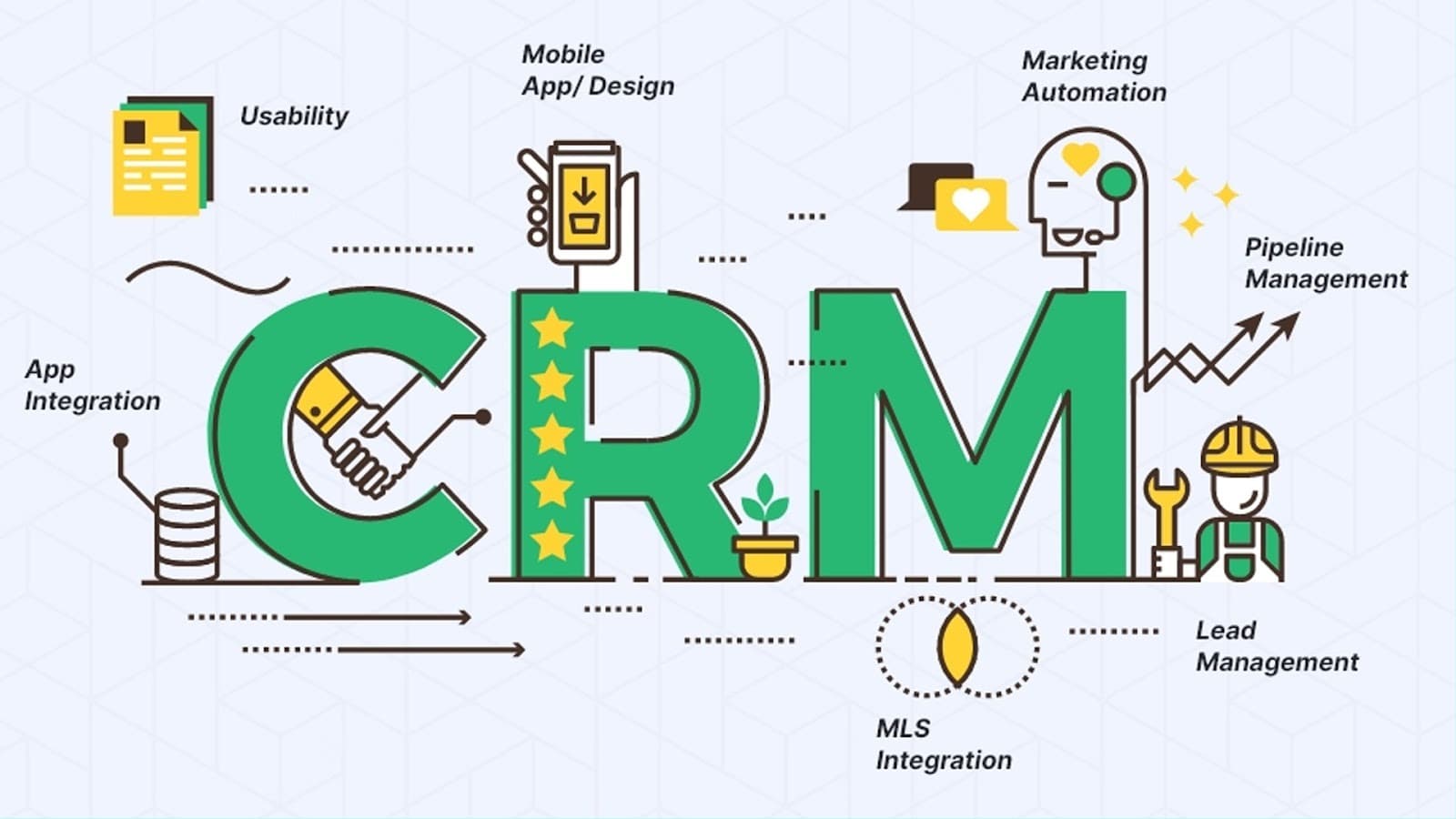
A real estate CRM must have practical insights: reports of leads sources, coverages, agent performance, marketing returns, and mean leads time on market. The metrics are useful in making investments in an agency that are wise.
Three months into Facebook property advertisements, a brokerage analytic scans the CRM analytics and finds out that the Instagram ads are yielding quality leads, and a higher number of people are converting. The team allocates budget based on this and experiences growth in appointed teams and contracted agreements. In the absence of analytics, this information will be buried under the carpet and funds may still be sent to inefficient channels.
Mobile App for Agents on the Go
Real estate does not occur in a desk. Agents are in constant motion -showing houses, seeing customers, networking. A CRM that has a powerful mobile application will be given to make sure that data is updated in real time.
In an open house, a buyer shows interest in conducting a second visit. The agent would immediately fill in the request in the CRM app rather than wait until he or she is back in the office, initiating an automated follow-up and making the appointment immediately. The mobile access is also responsive and agile, and it provides agents with a competitive advantage.
Integrations With Listing Platforms and Marketing Tools
Current CRMs are integrated with MLS systems, listing sites, e-mail marketing campaigns and social media. This provides the removal of duplication of data entry, enhanced lead routing, and centralization of work processes.
An agency can also have the CRM synchronized with MLS feeds to ensure that notifications regarding new listings are sent automatically when it is relevant to the preferences of a buyer. Customers receive the notification immediately either through email or SMS creating faster showings and happy customers. This complete integration will speed up the process between interest and contract.
Custom Workflows and Automation Rules
All brokerages do not work in the same manner. Developed CRMs enable agencies to create custom workflows such as automatically assigning tasks when a specific score is reached on a lead or drip emails when behaving.
By downloading a “Home Price Guide”, the CRM sends the player through a nurture chain: welcome email, suggestions on new properties within 48 hours, a follow-up SMS 5 days later. In case the lead clicks links or responds, the system assigns the urgency again and notifies an agent. This clever automation gives continuity at a time that is saved.
Security and Data Compliance
Real estate CRM manages sensitive details of clients. Such security measures as role-based access, encrypted data and the ability to comply with local standards are needed to keep the trust and secure the business.
With a large agency that has different offices, access will be limited and only concerned agents will have access to confidential documents. The managers have the capability of auditing the people who had access to what and when, which upholds accountability and the security of data. Such security measures protect reputation and ensure legal troubles in the future.
Final Thoughts: Features That Deliver Real Value
There is no question of investing in CRM software in real estate, it is not about possessing one more tool but giving the agents the capabilities to power daily. Smooth through automated lead-capture to pipeline-visualization, coupled with built-in communication to mobile access, each is making things easier, boosting conversions, and driving client satisfaction.
Any CRM program which provides value is not always the most expensive, but the one which fits the workflow of the agency, improves productivity and provides measurable outcomes. The ROI will be evident when agents focus on building relationships and making deals rather than spending additional time on the repetitive chores.
Are spreadsheets, fragmented applications, or manual follow-ups still used by your agency? It's time to reconsider your strategy. The correct CRM does not merely structure data, but it changes the manner of doing business.