.png)



Development Software that Scales Along with you.
Consider the process of Netflix substituting the DVDs or the example of Slack that transformed team communication. Both did not become an overnight success. Both of them started with a very simple concept which was to create something easy to use, everywhere. This is what is beautiful about SaaS ( Software as a Service ). And when it is designed to suit your company even better.
The development of SaaS applications and custom services are precisely what the words imply a software being built around you as opposed to vice versa. Whether you are a small company that needs to get its business operating quickly or a large one that needs to upgrade its old systems, custom SaaS could help you remain flexible, scalable, and relevable in a rapidly changing world.
What is Custom SaaS Application Development?
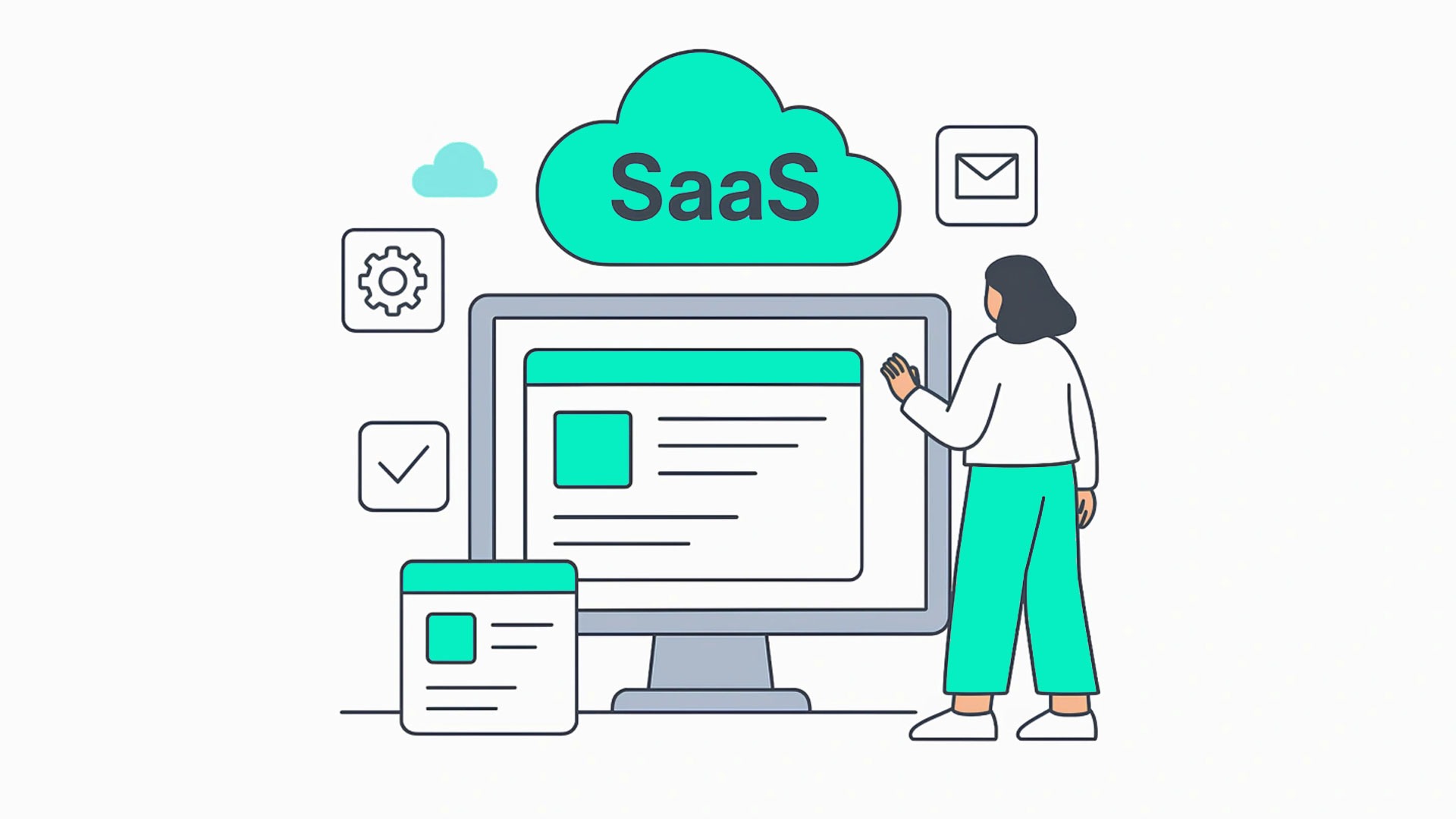
SaaS refers to software provided online products such as Google Workspace, Zoom, or Notion. You do not install it into your computer but you just log in and use it.
Suppose you are operating a logistics organization. Ready-made tools may deal with the deliveries, however, they will not know your routes, driver shifts and what your customers require. The place where custom SaaS development is is where it fits in.
A bespoke SaaS platform is made to match your business model, incorporating workflow, data, and objectives in a single platform. It is scalable because it can be expanded with your expansion so as to do 10 customers today or 10,000 tomorrow.
In short:
Startups receive rapid, inexpensive, and scalable product.
Business ventures receive high-end automation and integrations as well as control.
The Reason Startups Prefer Custom SaaS.
There is power in moving fast and learning faster which startups survive on. Generic software is known to slow things down. You take time to adapt to the tool and not vice versa. Custom SaaS flips that. It shapes towards the way your startup works.
Take Airtable for example. Airtable founders in its infancy had not discovered a tool that fitted their vision spreadsheets with database power. Thereby, they created their own SaaS product. Nowadays it is being employed by both startups and international corporations.
When your startup custom SaaS MVP is developed you are able to:
- Get to market both quicker and faster with real market feedback.
- Create and delete features with learning ease.
- Stay frugal by ensuring that only constructions matter at the initial stage.
Example: A Food Delivery Startup
A startup in its infancy was interested in assisting the local restaurants to do deliveries in small towns, where there was no large supply of the big platform such as UberEats. They developed an individual SaaS solution, which:
- Referral restaurants to freelance drivers.
- Wholesale payments and order tracking.
- Provided analytics to its restaurant owners on recurring customers.
In half a year, they had expanded to 80 restaurants. That is what occurs when your technology is as good as your idea, not vice versa.
Why Enterprises Need Custom SaaS
In the case of businesses, the problem of going fast is not so difficult but remaining lean and unified. Some tools already in use by big companies include CRMs, ERPs, HR tools, and analytics dashboards. The problem? There are a lot of times these tools do not communicate.
That is covered by a custom SaaS application. It functions as a central nervous system where all the data of all the departments are linked through marketing, sales, operations and customer support under one roof.
Example: A Logistics Enterprise.
An international transportation firm was grappling with the inability to monitor deliveries by regions. Drivers were communicating with the various apps and the reports were received in the form of emails and excel sheets. They contracted a SaaS development team to develop a tailored logistics platform that:
- Permitted vehicle real-time tracking.
- Scheduling of fuel and driver schedules.
- Sends automated shipping and deliveries to customers.
- Their delivery time drops reduced by 35 within a year and efficiency increased by 50.
- It is what makes a custom designed system so strong, it does not merely work, it works well.
How To Develop SaaS? - A Step By Step Guide.
Start up or an enterprise, a specific roadmap takes place during the development of a custom SaaS product.
1. Discovery & Strategy
And one of the most important things that make any great product begin is knowledge of your users. What problems do they face? What do you feel are the shortcomings in your process?
As an example, a small property management start-up came to the realization that their clients (who were landlords) were overwhelmed with an excessive amount of apps to collect rent, do repairs, and communicate with tenants. The discovery stage served to determine these pain points and build one SaaS platform to control it all.
2. Design & Prototyping
After the idea has been tested, UX/UI designers must develop wireframes and prototypes. The intention is to ensure that it remains humanly user-friendly rather than technical.In case your users are not tech, such as the restaurant owners or the real estate agents, the interface must be user-friendly and be easy to understand, such as the Airbnb design: it is not messy, plain, and not difficult to navigate.
3. Development & Testing
The developers then construct the backend and frontend ensuring the platform is cloud based, secure and scalable. They use external components, such as payment gateways, a chat system, or analytics dashboard. Testing occurs in practice - real users commenting on it. Such a human strategy provides you with the fact that your product will be solving real problems.
4. Launch & Iterate
The SaaS product is not complete after it is launched. It evolves. The reactions of users influence a new functionality, better their UX, and adoption. Consider Slack - it was originally an internal messenger of one of the game companies. The feedback and a constant iteration made it the most popular workplace communication application in the world.

Advantages of SaaS Custom Development.
1. Scalability
This is because you can start with small and expand without necessarily restructuring your system.
2. Cost Efficiency
You do not need to pay a monthly subscription to various tools, have your own platform, and it is fully operational in your business.
3. Data Security
It is your data, and you are in charge of your own privacy policies.
4. Integration
Link all your systems 01 accounting, 01 analytics.
5. User Experience
Custom SaaS gives you an opportunity to create an experience that is natural to your team and consumers.
6. Competitive Advantage
When the software is one that only your business has, this is a strategic advantage that would not be duplicated by your competitors.

Real-World Industry Examples
Let’s look at a few industries that have transformed using custom SaaS applications:
1. Real Estate
SaaS products such as Zillow and the Propertyware have been developed as custom builds. Today, smaller real estate agencies make their own SaaS-based tools to manage their listing, client communications, and property insights, all in a single place.
2. Food & Beverage (F&B)
SaaS helps restaurants to make bookings and deliveries and menus. This is due to a startup in Dubai that developed a specifically designed restaurant SaaS, which assists small-scale chefs in renting a commercial kitchen on command, thus forming the so-called cloud kitchen model.
3. Logistics
Custom SaaS is employed by such companies as DHL to manage their fleets and routes or run warehouses. Lightweight SaaS has become sufficiently popular now to be invested in by even small courier businesses, which can expand with it.
4. Healthcare
Custom SaaS is used by hospitals to manage patient records, telemedicine, and appointment booking - enhancing care and efficiency.

The Human Side of SaaS
People are the centrals of any great software product.
The humanized SaaS experience implies:
- Easy design that does not bewilder users.
- Onboarding that is easy enough to be used by anyone including a driver as well as a manager.
- Quick service when something goes wrong.
Technology is not taking away human beings, it is aiding them. Custom SaaS is aimed at making life easier, improving the speed of work, and making decisions smarter to all parties.
Final Thoughts
SaaS application development is not about coding or designing, but creating digital experiences around people, which constitutes a custom SaaS application development.
In the case of startups, it is the difference between a company that has its problems scaling, and the next big thing. To businesses, it is the gateway uniting the old systems and the new working processes.
With the abundance of generic solutions, personalized SaaS is your own roadmap of the digital world - you know how to move your business under the quickly evolving circumstances. So whether you’re running a small startup in Pakistan or managing a logistics enterprise in Dubai or USA, your journey toward efficiency, growth, and innovation starts with one decision:
Build software that fits your story.